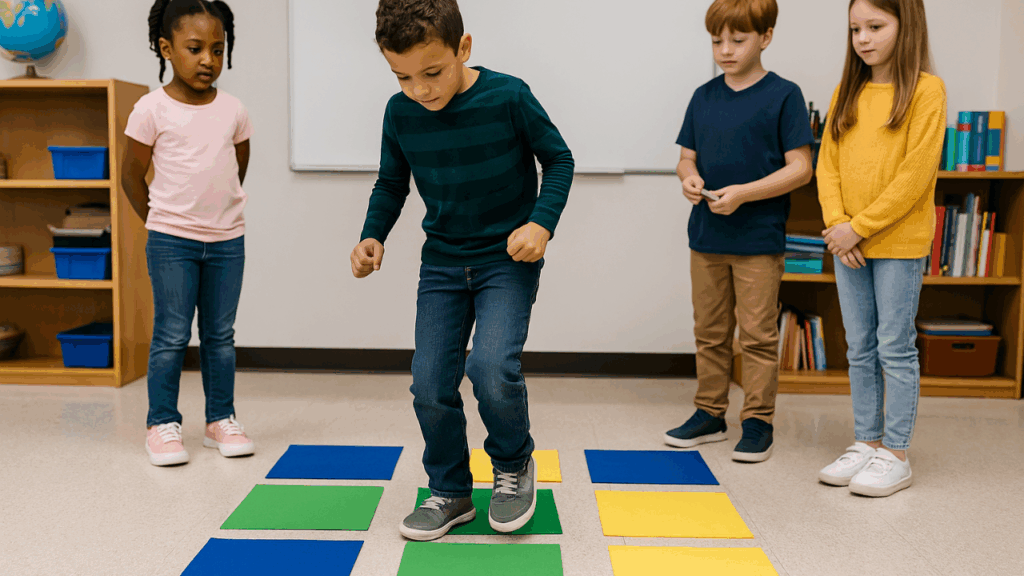
Have you ever watched a group of kids so focused they’re practically holding their breath? That’s what happens during Hop-a-Pattern, a movement-based memory challenge that invites children to slow down, think ahead, and use what they’ve learned to discover the secret pattern.
How the Game Works
This game can be played on a grid made of tape or twelve felt squares arranged in a 4×3 pattern. The object of the game is to move through the grid by stepping on squares in a specific order — a “secret code” known only to the leader.
As players step from one square to another in the correct sequence, they may continue to advance. If they step out of sequence, their turn is over. The next player in line then has an opportunity to start from the beginning of the grid and continue the pattern, using what they’ve observed from previous turns.
While only one student is hopping, everyone’s brain is working. The watchers are observing, storing information, and predicting the next move. By the time it’s their turn, they’ve created a mental map of what works and what doesn’t.
The Brain Connection
This game is powered by episodic memory — the brain’s ability to recall past experiences and use that information to make future decisions. It’s the same skill Emory the Elephant uses in Cranium Critters: Team Up with the Memory Keeper. Emory reminds us to “look back to move forward,” and that’s exactly what happens in Hop-a-Pattern.
Each player draws on what they’ve seen before, strengthening the neural pathways that connect memory, focus, and problem-solving. The result? A fun, full-body way to stretch those “memory muscles” without a worksheet in sight.
From the Game to Real Life
I love games that are fun and teach life lessons at the same time. The thinking skills practiced in Hop-a-Pattern extend far beyond the grid — they connect to social, emotional, and academic learning, too.
- Having friendship trouble? 💭 Ask yourself, What have I tried in the past that was helpful?
- Feeling anxious about something new or different? 💭 Remember similar situations that turned out okay.
- Struggling with a STEM challenge? 💭 Think about what worked well before and try it again.
Even mistakes can serve as great memory boosters! When we reflect on times things didn’t go as expected, we build stronger mental pathways that help us make better choices next time.
Little Life Lessons 🧠 BIG Life Skills
When children connect movement with memory, they engage both sides of the brain. They learn through doing, observing, and reflecting — a process that deepens understanding far more than rote memorization. And perhaps most importantly, Hop-a-Pattern reminds them that mistakes aren’t setbacks; they’re stepping-stones toward success.
So next time your students (or kids at home) need a brain break that builds focus and fun, grab some tape, make a grid, and let the hopping begin. Each step strengthens not just their legs, but their learning — and each reflection helps their brains grow stronger and wiser.
Want to Try It?
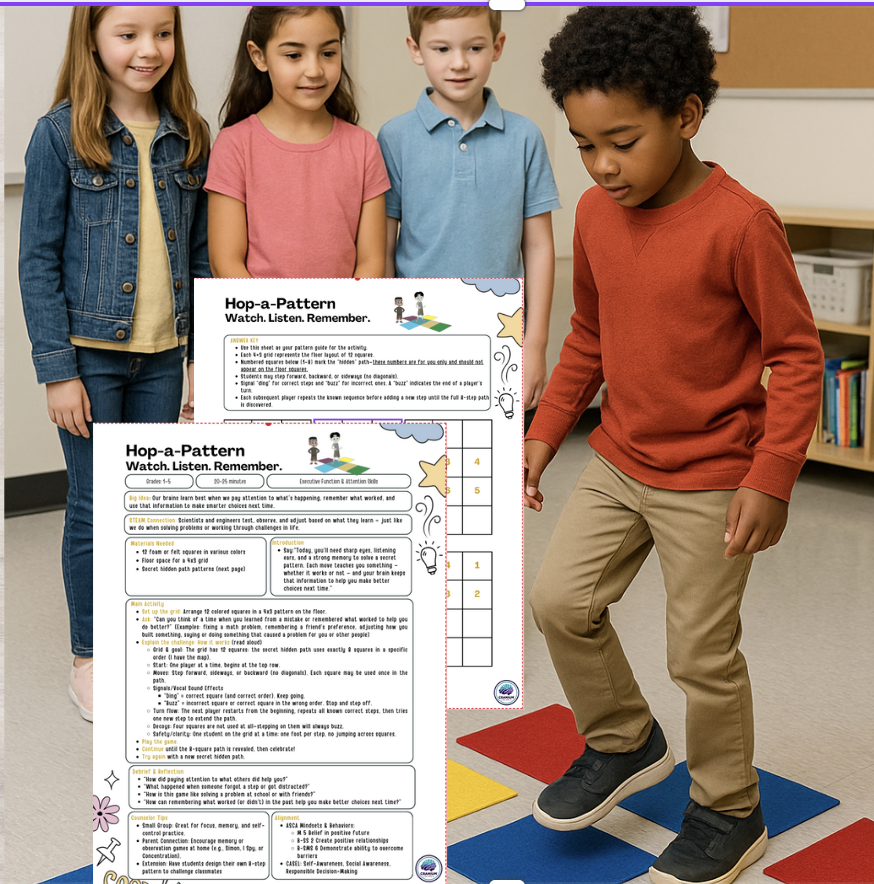
Download the full Hop-a-Pattern lesson plan on our Cranium Resources page — complete with setup instructions, discussion prompts, and extension ideas.
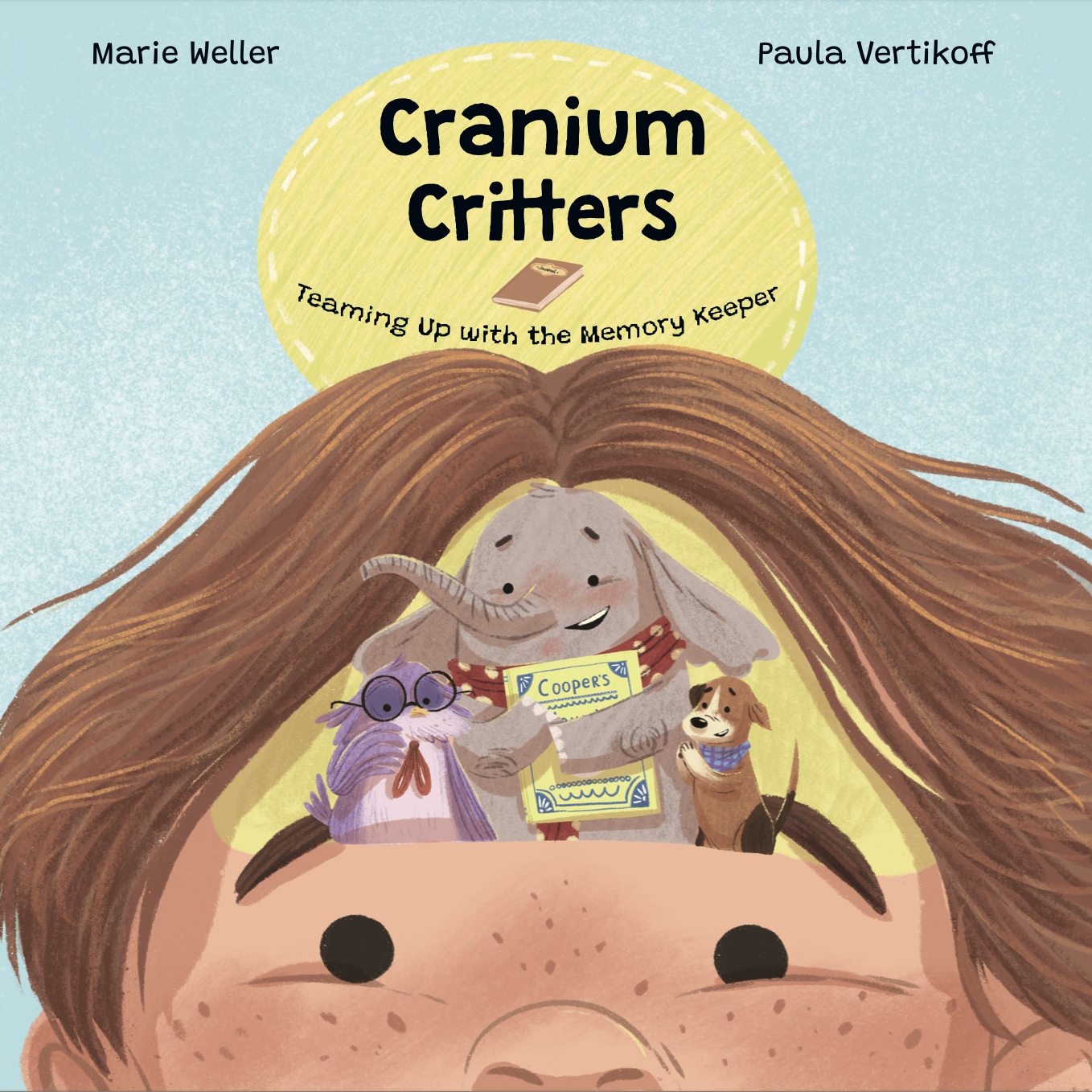
And if you’d like to learn more about Emory the Elephant, the brain’s Memory Keeper, check out our picture book
Cranium Critters: Teaming Up with the Memory Keeper — where Emory helps kids use their memories to overcome frustration and move from “I can’t” to “I can.”