
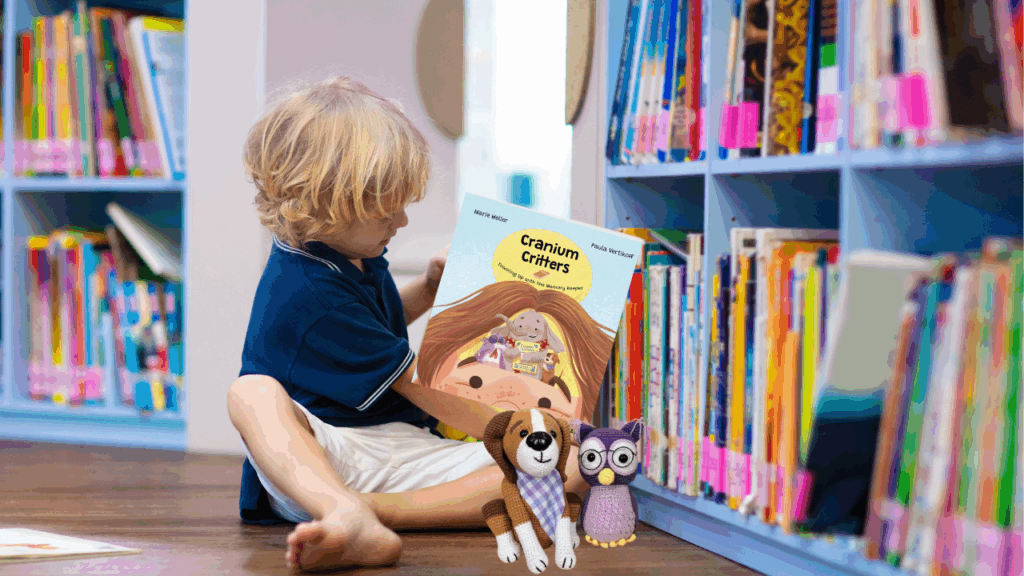
Just like a winning team, the different parts of your child’s brain perform best when they communicate and cooperate. With the upcoming launch of Cranium Critters: Teaming Up with the Memory Keeper, now is a perfect time to explore how thoughts, emotions, and memories collaborate to help children navigate life’s ups and downs.
The Brain’s Dream Team: Scout, Einstein, and Emory
Our Cranium Critters characters each represent a key brain function:
- Scout the Safety Pup (Amygdala)—the emotional guard dog who alerts us to potential threats, quickly triggering strong emotions like fear, worry, or excitement.
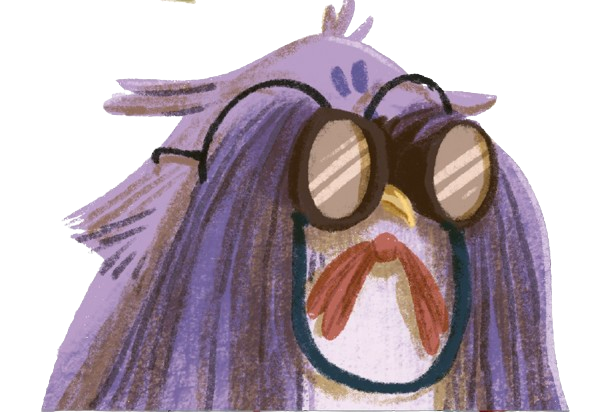
- Einstein the Owl (Prefrontal Cortex)—the thoughtful planner and problem-solver, responsible for reasoning, decision-making, and managing emotions.
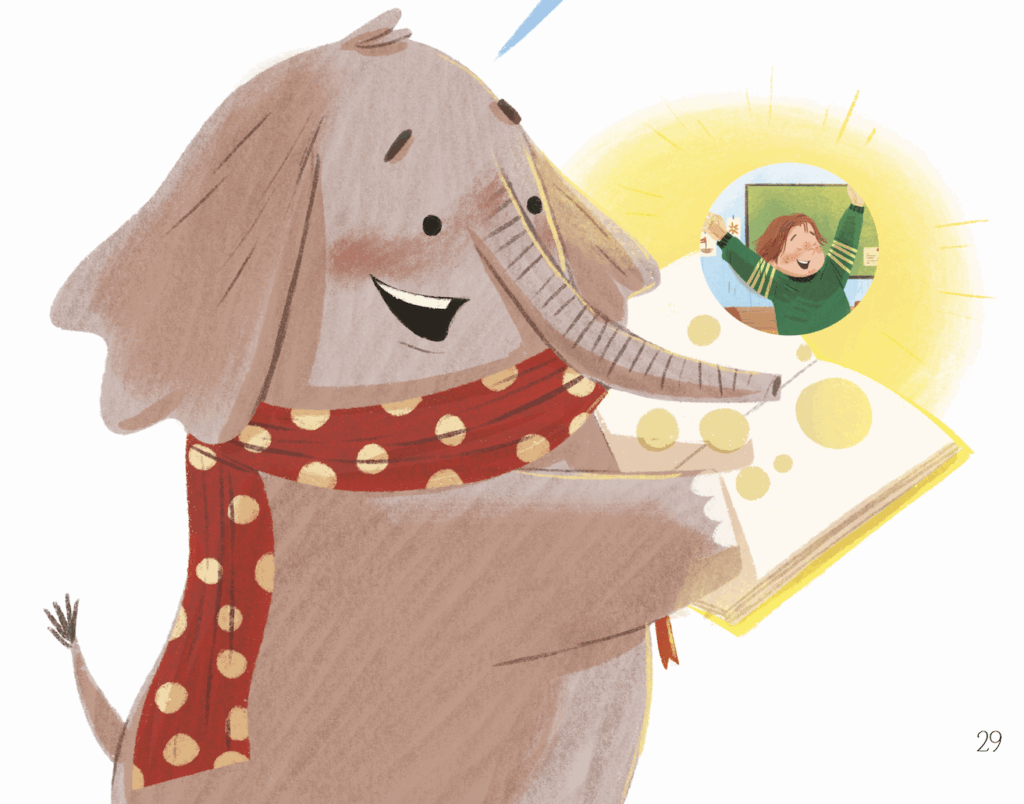
- Emory the Elephant (Hippocampus)—the memory keeper who stores important experiences, helping to guide decisions and emotional responses.

How Emotions, Thoughts, and Memories Work Together
When children face challenges—like a difficult school assignment or a conflict with a friend—these three brain parts team up to guide them:
- Scout detects potential danger or stress, triggering rapid emotional reactions. While helpful, these strong emotions can sometimes overwhelm children, creating “brain fog.”
- Einstein attempts to manage these emotions by devising thoughtful solutions and strategies, but overwhelming feelings may interfere with clear thinking.
- Emory steps in to help clear the fog by recalling similar past experiences. Remembering how they successfully navigated previous challenges helps children calm their emotions and restore clear thinking.
Why This Teamwork is Important
Collaboration between emotions, thoughts, and memories helps children:
- Feel Safe and Secure: Recognizing familiar experiences reduces anxiety and stress.
- Learn and Grow: Applying lessons from past challenges helps them handle new situations with confidence.
- Manage Emotions Effectively: Clear thinking supports better decision-making and problem-solving.
- Build Resilience and Confidence: Remembering past successes reinforces their belief in their abilities.
Strengthening Your Child’s Brain Teamwork
Here are simple activities to encourage strong connections between your child’s thoughts, emotions, and memories:
- Emotion Reflections: Regularly ask children how events made them feel, and discuss the thoughts that accompanied those feelings. For instance, help them recognize the feeling of pride after they’ve worked hard to master a new skill, such as riding a bike or memorizing math facts. You might also explore feelings of relief after successfully resolving a misunderstanding or conflict with a close friend, guiding them to connect their emotions with the situation and their actions.
- Memory Sharing: Encourage storytelling about past successes or joyful experiences to reinforce positive emotional associations. Start conversations casually by saying, “Remember that time when you jumped off the diving board all by yourself?” or “I was just thinking about your first day of school. At first you were really nervous, but then ended up having a great day.” Sharing these memories can help children recall the good feelings associated with overcoming challenges and having happy experiences.
- Thoughtful Problem-Solving: When facing new challenges, prompt your child to recall similar situations they’ve encountered in the past and discuss how they handled them. Ask questions like, “Remember when you felt nervous before your dance recital? What helped you feel calmer then?” or “You’ve solved tricky puzzles before; what strategies did you use?” This encourages children to reflect on past successes, building their confidence and equipping them with strategies they can apply to current and future challenges.
Remember, when strong emotions cloud clear thinking, children often depend on trusted adults to help them recall helpful memories. Similarly, adults themselves benefit from seeking the counsel of close friends when emotions make it challenging to think clearly or remember supportive past experiences. This highlights the power of emotional co-regulation—not only within our brains but also through our relationships with each other.

Teaming Up with Emory the Memory Keeper
In our newest Cranium Critters adventure, children discover how Emory supports Scout and Einstein. Emory teaches children that drawing on positive memories can help manage anxiety, regulate emotions, and confidently navigate life’s challenges.
Join us in celebrating how your child’s Cranium Critters team up to build resilience, confidence, and emotional well-being!